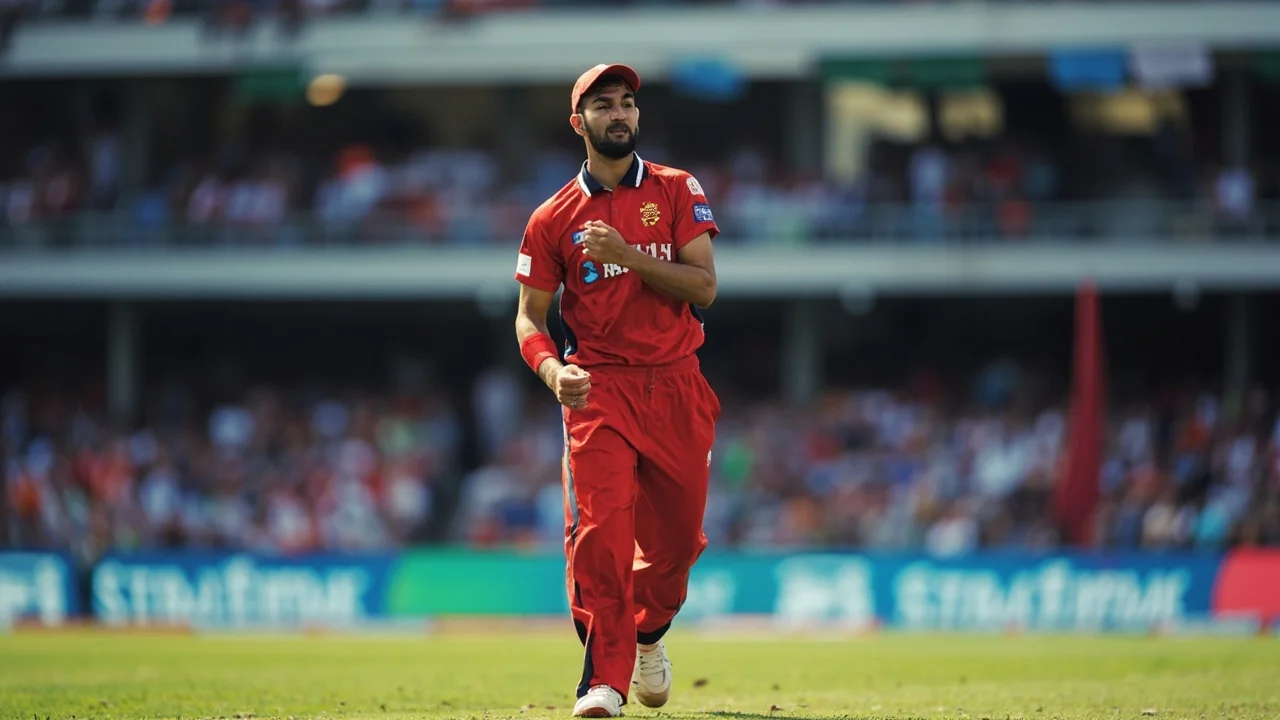
The numbers from the first half of IPL 2026 land harder than any single highlight reel can. By the close of the RCB vs LSG fixture on Thursday 7 May, with twenty league games still to play, teams had crossed the 200-mark on 42 occasions. The entirety of IPL 2025 saw 51 such totals. Across IPL 2025 there were only 8 successful chases of 200 or more; through the first 50 games of IPL 2026 there have already been 12. The shape of the contest has shifted, and it has shifted because two structural changes have been pulling in the same direction at once.
Surface preparation has produced decks that behave closer to practice nets than to Test-match squares. The Impact Player rule, introduced four seasons before this one and increasingly exploited as an extra-batter substitution rather than a like-for-like replacement, has stripped captains of the fifth-bowler cushion they used to plan around. Read those two trends together and the bowling side of an IPL innings stops looking like a tactical conversation and starts looking like a damage limitation exercise. Below is the read of what the numbers actually show, what they imply for fantasy cricket scoring, and where the trend sits against the historical IPL record.
The 42-in-50 ledger
200-plus team totals in T20 cricket were once the marker of a special innings. Through the first 50 games of IPL 2026 they have become the median for an above-par batting performance. To put the figure in perspective: across the entire 2025 season the league played 74 matches and crossed the 200-mark 51 times, roughly 0.69 per match. Through the first 50 games of IPL 2026 the rate is 0.84 per match, with twenty games still to play, and the curve has not flattened in the back half of the season.
What makes the figure sharper is the chase record. Twelve of those 200-plus totals have already been chased down successfully in IPL 2026, against 8 across the entirety of IPL 2025. That is not a marginal increase; that is the difference between a 200-run total being a match-winning score (IPL 2024-25) and a par score (IPL 2026). The 200 threshold has migrated from ceiling to baseline. The implication for bowlers is not that they have become worse at their job; it is that the conditions and the rulebook have combined to give the batting side a structural head start that skill alone cannot offset.
The Impact Player multiplier
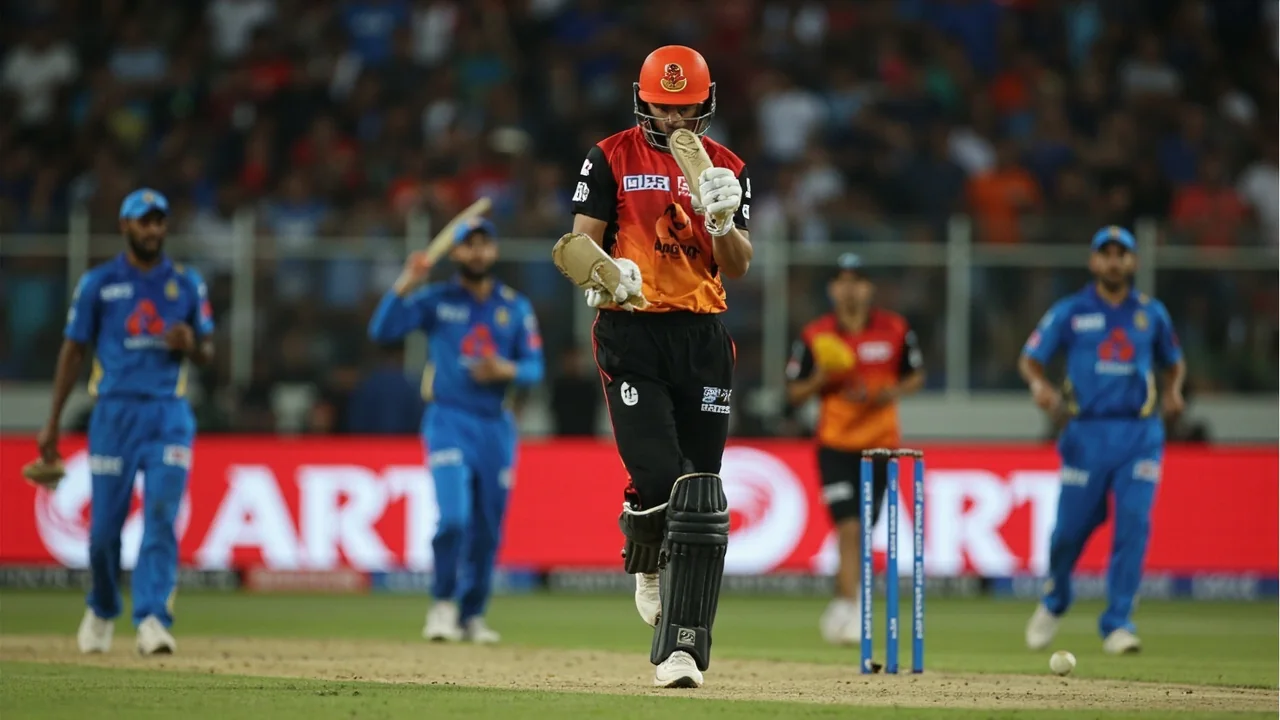
The Impact Player rule was introduced from IPL 2023 onward as a substitution tool meant to give teams an extra overseas option, an extra batter in a chase, or an extra bowler on a helpful surface. By 2026 the way franchises have actually used the rule is narrower than the original brief: the substitution overwhelmingly skews toward extra batting depth, not extra bowling variety. The on-field XI in IPL 2026 typically has seven batters and four bowlers, sometimes eight batters and three bowlers when a chasing team needs one more boundary option late.
The result is that the fifth-bowler slot, which used to be a planned role for a part-time spinner or a seamer who could bowl two overs at the death, has effectively been absorbed into the batting order. When the captain's brief at the toss is "we'll need 200 plus to win this", the fifth-bowler calculus shifts from "who gives us two tight death overs" to "who can we afford to lose when their overs go for 45". That is a different kind of trade-off, and it is the one franchises have been making for the last two seasons.
The Padikkal-Tim David template
The clearest illustration of how the rule functions in match conditions came in the Royal Challengers Bangalore innings against Gujarat Titans earlier in the season. Devdutt Padikkal's 27-ball 55 came in a batting unit that featured Tim David at six, Romario Shepherd at seven, and Jitesh Sharma at eight. After the game Padikkal credited the lower-order batting firepower for letting him play freely: "when you know the guys behind you can clear the ropes, you take on the bowler early". The dynamic he describes is the rule's first-order effect: batters at the top of the order take more risks because the cost of getting out early has fallen. A collapse from 30 for 3 becomes recoverable when four batters who can clear the ropes are still to come.
For the bowling side, the second-order effect is the one that hurts. Death overs used to be a specialist's territory. In IPL 2026 they have become a length-of-the-innings test against batsmen who have not had to accumulate the hard yards. Bowlers who used to be trusted with the 18th and 20th over are now being asked to contain eight batters in a row rather than five, with shorter rest windows between overs because the captain can rotate five-bowler workloads against specialist batting depth.
What the surface is doing
The pitch conversation runs in parallel. Groundsmen across the ten IPL venues have, by and large, prepared surfaces that play true from ball one and do not deteriorate significantly through the second innings. The template for a 200-plus chase has been: lose one wicket in the powerplay, accelerate from overs 7 to 14 against a defensive field, then target the death. On a slow surface or a turning square, that plan runs into a wall. On a flat surface, the plan runs into the boundary.
The implication that the bowling community has been most vocal about is the one Muttiah Muralitharan put on record in conversation with the Deccan Herald. "On these wickets," he said, "even Shane Warne and I would have leaked around 40 runs. The surfaces are so good that the contest between bat and ball has gone out of the window." The framing matters because it comes from the most successful spinner in cricket history. Whether or not one accepts the full strength of his claim, the underlying observation is correct: the spinner-versus-batter contest that used to produce wickets in the middle overs has shrunk as a share of overall match outcomes.
Read the spinners' numbers together and the structural shift is unambiguous. Overs bowled by spinners have fallen from 38.3 percent of the total to 32.1 percent. The wickets they take have fallen from 36.4 percent of the total to 30.9 percent. The runs they concede per over have risen from 8.86 to 9.20. None of these movements is a marginal blip; together they describe a category of bowler being used less, succeeding less when used, and conceding more when successful. Captains have responded by handing more of the middle overs to seamers who can hit the deck harder, and by trusting their part-time options less because the returns do not justify the slot.
The "260 is no longer safe" frame
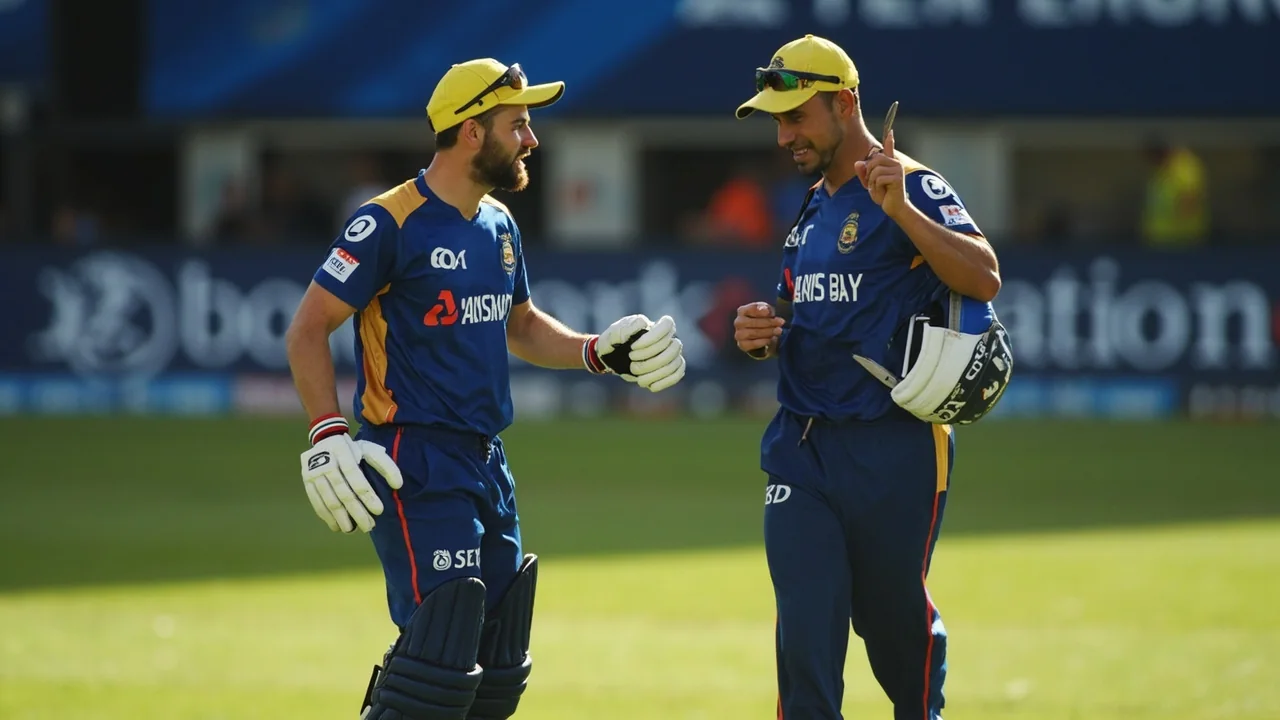
The most pointed observation in the source material is the framing that totals above 260 no longer count as match-winning on a flat deck with the Impact Player rule in place. The logic runs as follows. If a batting team is targeting 200 in a 20-over innings, the expected chase total for the side batting second is somewhere between 180 and 220, depending on the surface and the wickets in hand. If the chasing side has seven batters who can clear the ropes in their XI, the lower bound of that chase window slides upward. A score of 220 becomes a par score rather than a winning one. A score of 260 becomes the kind of target that needs an unlikely death-overs collapse from the chasing side to defend.
This is where the marginalisation framing lands hardest on the bowlers. The defensive ceiling has moved up. A specialist death bowler in IPL 2025 could plan for the 18th, 19th and 20th over with the assumption that conceding 12-14 runs per over would be enough. In IPL 2026 the same bowler needs to plan for conceding 10-11 runs per over while the batting side is targeting 15, and the window for a wicket-taking delivery is narrower because batters are choosing risk-on options earlier in the innings.
What the bowlers are actually saying
Off-record, several captains have used the same phrase when asked about their bowling plans: "we have to take wickets in the powerplay or we are not coming back". The number of wickets taken in the first six overs is up across the league compared to IPL 2025, partly because captains are attacking more aggressively with the new ball, and partly because conceding 60 for 1 in the powerplay is no longer a recoverable start. The shift in the bowling strategy is a direct response to the shift in the batting economy.
The body language of fast bowlers at the back end of an innings tells its own story. Lengths that used to be defended as "good balls" are now being put away as boundary options. Yorkers that used to be saved for the death are being used in the 14th over because batters are clearing the front foot earlier. Variation bowling, the craft that spinners and seamers alike used to deploy once the batters had committed to a tempo, has been compressed into a smaller window because the batter's commitment point has moved up the innings.
What this means for fantasy cricket scoring
The fantasy side of this conversation is where the bowling marginalisation has the cleanest second-order effects. Daily fantasy platforms reward batting points more heavily than bowling points in absolute terms, but they reward wicket-taking heavily enough that a specialist bowler with a 3-wicket haul can outscore a top-order batter. The question for fantasy players is whether the structural conditions in IPL 2026 are compressing the bowling points floor or expanding it.
Three patterns matter for fantasy team selection. First, wicket-taking bowlers have seen their ceiling move up because more wickets are falling in the powerplay. Second, economy-rate bowlers have seen their floor fall because the conditions are pulling run rates upward. Third, all-rounder batters who bowl two or three overs have become a more valuable fantasy category because their bowling allocation carries less risk than a specialist bowler's full four overs. The combined effect is to widen the gap between top-tier bowling assets (who take early wickets) and bench-tier bowling assets (who contain runs), which changes captain pick considerations.
For captain picks specifically, the structural shift matters because it changes the spread of expected points between top-order batters and bowling all-rounders. In IPL 2025 a captain pick on a specialist batter like Virat Kohli was a high-floor, high-ceiling option. In IPL 2026 a captain pick on a bowling all-rounder like Sunil Narine or Andre Russell combines two scoring channels: the batting points from a quick 20-30 at the top of the order, and the bowling points from two overs that historically would have returned 1-2 wickets. The combined ceiling makes them the captain pick in a way that has not been true in any previous IPL season. The fantasy guides archive on this site tracks the captain-pick math across IPL seasons and is a useful reference point for how the role has evolved.
How the rule is shaping retention and auction math
The IPL 2026 season is also the first major test of how the auction system prices two-skill assets versus single-skill assets under the Impact Player rule. Pre-auction valuations of pure bowlers have fallen across franchises, because the substitution cushion means a captain does not need to budget for a specialist bowler's full four overs when the XI can absorb a part-time option. Pre-auction valuations of all-rounder batters who bowl have moved in the other direction, because the rule now rewards players who can absorb two roles rather than one.
For the long-run health of the competition the question is whether the BCCI's rule review process takes the marginalisation argument seriously enough to revisit the Impact Player framework. The argument for revisiting is the one this season's numbers make: the bowling side of the contest has been compressed into a smaller share of match outcomes than in any previous IPL. The argument against revisiting is the commercial one: 200-plus totals have produced more highlights, more memorable finishes, more broadcast-friendly moments. Whether the contest-balance argument wins out over the commercial argument is a decision that belongs to the administrators rather than to the bowlers themselves.
What to watch through the back half
The remaining twenty games of the league stage, plus the playoffs, will tell us whether the trend is structural or whether it moderates as bowlers adapt. Two indicators to track. First, spinner workloads in the middle overs (overs 7-15). If spinner overs recover toward 35 percent of the total, the conditions or the captaincy strategies have started to account for the trend. Second, successful chase rate above 200. If the count rises above 15, the batting ceiling has moved up further and the bowling side is being asked to defend even bigger totals in the second innings.
The honest read of the IPL 2026 season so far is that it has not seen bowlers get worse at their craft. What it has seen is the rulebook and the surface preparation combine to reduce the room in which the bowling craft can express itself. That is a different kind of problem than a skill gap, and it is the kind of problem that gets harder to solve once the auction valuations of pure bowlers fall further. The season's final month will be watched as much by franchise analysts as by fans for exactly this reason.
Verified facts behind this read
This article is built from the verified analytical feature carried by Deccan Herald on 10 May 2026, "IPL's big batting obsession", which walked the numbers through the first 50 games of the season. The 42 team totals of 200-plus, the 51 totals of 200-plus in IPL 2025, the 12 successful 200-plus chases in IPL 2026 against 8 in IPL 2025, the 38.3 percent spinner share of overs in IPL 2025 against 32.1 percent in IPL 2026, the 36.4 percent spinner share of wickets in IPL 2025 against 30.9 percent in IPL 2026, the 8.86 spinner economy in IPL 2025 against 9.20 in IPL 2026, the Padikkal innings against Gujarat Titans, the Muralitharan observation on flat wickets, and the framing that totals above 260 no longer count as safe are all sourced facts from that piece. No further player reactions, post-match quotes, or auction predictions beyond what those facts allow have been added; doing so would weaken the read rather than strengthen it.